
Is Yoga Enough? Why We're Asking the Wrong Question
Jun 21, 2026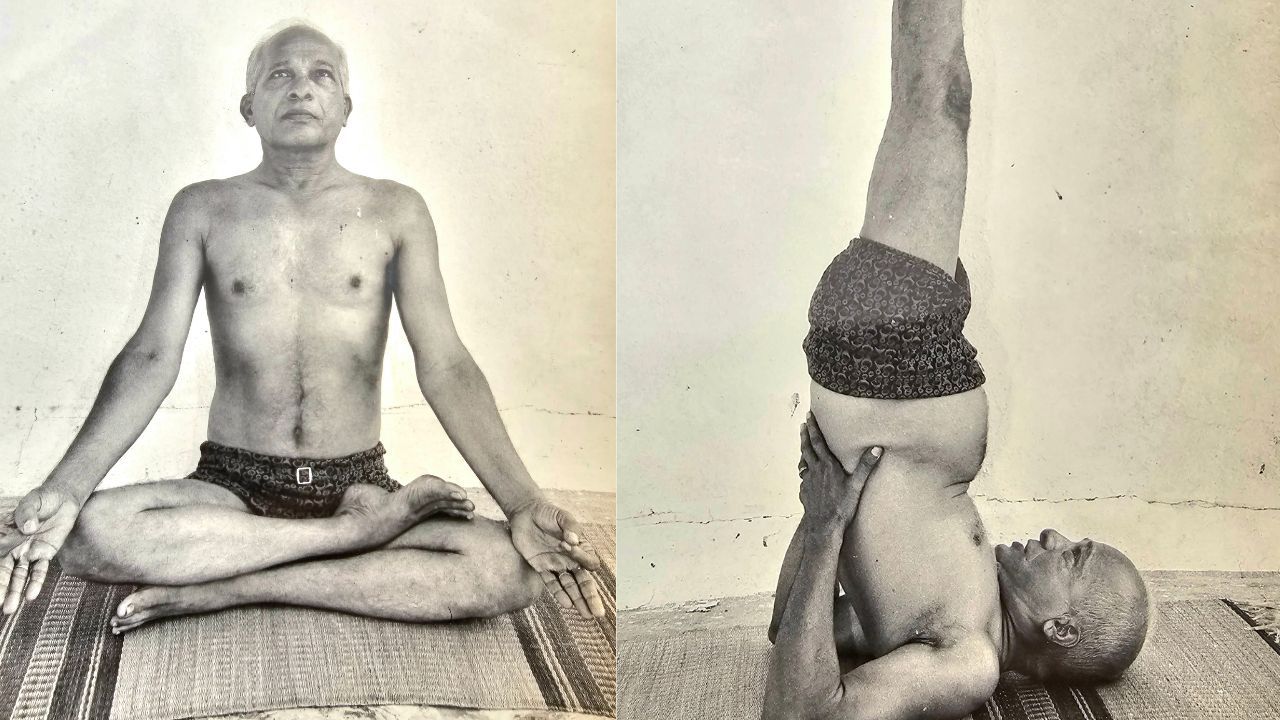
I have been exposed to yoga in some form since I was 3 years old. Not by choice, I was born into it. My grandfather was a teacher, my mother was a teacher, and I was the child sitting at the back of the room on a folded towel on the floor, watching adults breathe, move and sit in silence in a way that seemed, to my 3-year-old self, completely ordinary.
It wasn't ordinary. I just didn't know that yet.
I'm writing this on International Yoga Day and to be honest, I almost didn't write anything. Because every year on this day the internet fills up with content about the benefits of yoga: the flexibility, the stress relief, better sleep, a calmer nervous system, the transformation.
All true. All of it missing the point.
Because the more interesting question is not what yoga does.
It is what makes yoga, yoga.
Is Yoga Different From Exercise? The Debate That Misses the Point
Scroll through social media on any given day and you'll find it. Yoga versus pilates. Yoga versus resistance training. Yoga and meditation, yoga and breathwork - as if these are separate products you can stack or swap depending on what your body needs this season.
I understand why the debate exists. The wellness industry runs on comparison. It needs you to be choosing between things, optimising your protocol, upgrading your method. And yoga, with its thousands of years of history and its inconvenient refusal to be reduced to a set of measurable outcomes, is a difficult thing to sell in that landscape.
So, it got chopped up. The breathwork became its own product. The meditation became its own app. The physical practice became a fitness method that could be legitimately compared to pilates for core strength or resistance training for bone density.
And somewhere in that process, the thing that makes yoga yoga got lost.
Here's what I mean. In the classical system, the one my grandfather taught, the one I grew up inside, breathwork is not something you do alongside yoga. It is yoga. Meditation is not a separate practice you add on after the physical work. It is yoga. The ethical precepts, the focused attention, the withdrawal of the senses, the contemplation, all of it is yoga. This is the eight limbed structure laid out over two thousand years ago, eight interconnected parts of a single system. The physical postures, the part most people recognise as yoga today, are just one of those eight.
One eighth.
When you compare yoga to fitness programs for strength outcomes, you are evaluating one eighth of a system against a complete method and declaring them equivalent. It's not a fair comparison. It's not even a meaningful one.
Fitness asks what your body can do. Yoga asks what your body is telling you.
Both are useful questions, but they are not the same question.
What is Yoga really?
My grandfather used to say: you are your own guinea pig.
He meant it practically. Take what you have learned, apply it to yourself, and pay attention to what actually happens. Not what the textbook says should happen. Not what your teacher tells you you should feel. What you actually notice, in your own body, over time.
That instruction - though so simple it sounds almost dismissive - is the most sophisticated thing anyone has ever said to me about the practice. Because it places the authority exactly where yoga has always insisted it belongs. With you. In your own direct experience. Accumulated over time.
This is what gets lost when yoga gets packaged into parts and sold as a fitness method. The system was always designed to make you your own authority. A breathing course, a meditation app, a physical practice stripped of its context, these things can be genuinely useful. But they are designed, structurally, to keep you coming back for more instruction. More guidance. More content.
A whole system that builds genuine self-knowledge over time is very difficult to monetise repeatedly. Once you have an internal reference point, once you trust your own body's signals enough to make decisions about how you move, rest, recover, and live, you need less from the outside. You become a less reliable consumer.
This is not about dismissing teachers, apps, or modern methods. Many of them are useful. But usefulness is not the same as wholeness.
How Yoga Changes Through Different Seasons of Life
I want to tell you about my own relationship with yoga because I think it illustrates something that no debate about yoga versus anything else ever captures.
I grew up learning the traditional practice. The foundational poses from the scriptures, repeated consistently, without much explanation. I was the difficult student who kept asking why. My mother found it exhausting. I just deeply wanted to understand the mechanics of how a pose or a breath or a meditation was actually affecting the body and mind.
Then modern yoga arrived and my 25 year old body was absolutely here for it. Vinyasa flows, power yoga, a bit of ashtanga. The physical practice was joyful and challenging and yes, it was part of how I trained. I was also running, hiking and playing sport and yoga sat alongside all of it, sometimes as the workout itself.
But even then, something was different about it. I just couldn't see it clearly at the time because the physical challenge was so front and centre. It was the one practice that turned my attention inward rather than forward. And without me fully understanding it, that quality of attention was quietly making everything else better.
Then came pregnancy, twice, and my relationship with my body shifted in a way I hadn't anticipated. My body was doing something enormous and largely without my input, and the practice became less about what I could do and entirely about what it was telling me it needed. I walked daily, kept moving, and practiced right through to the end of both pregnancies. What it gave me was a way of staying present and trusting through a process that was beyond my control. That's available to any woman regardless of how her pregnancy unfolds.
Then postpartum brought me back to the foundations again. The deep structural work, the breath, the slow rebuilding of connection between mind and body after the intensity of new motherhood. Less interest in what the practice looked like. More interest in what it was doing.
Now in my forties, the practice is evolving again as I navigate the shift my body and mind are going through. The physical postures are still there but I'm more interested in what's underneath them. The quality of attention I can bring to a pose rather than the shape of the pose itself. And the mental shifts - less reactive, more resilient, more trusting in my own body, feel more significant than anything I could measure physically.
Yoga met me at 3 years old and it has met me at every single stage since. In every phase of my life, it gave me exactly what I needed without me having to go anywhere else for it. I don't know any fitness method that can say that.
Whilst fitness methods build capacity in the body, Yoga builds it in the person:
Someone who trusted her own body enough to adapt through every phase without tension or resistance. Someone whose practice didn't stay on the mat, it showed up in how she made decisions, how she moved through difficulty, how she showed up as a woman, a daughter, a wife, a mother, a business owner. The breathwork, the ethical precepts, the stillness, the withdrawal from noise - all of it was quietly shaping not just how I moved but how I lived. That's not fitness. That's something else entirely.
Effort, ease, and letting go
This month in my classes we've been exploring what makes yoga yoga through an idea that sits at the heart of classical yoga.
Sthira sukha asanam, Patanjali's phrase, usually translated as steady and easeful should be the posture. Most people assume this is about finding a comfortable shape in a pose. But Patanjali was describing something far simpler and far harder than any physical shape.
Try this for a moment. As you're sitting here reading, come upright. Not performatively straight, just find the length of your spine and sit there. Now notice where the effort lives. Is the belly gripped? The jaw clenched? Are the shoulders doing more than they need to? You're not even moving and already the body is working harder than the moment requires.
Now see if you can bring some ease into those places without collapsing. Stay upright but release the grip around it. Soften your belly a little. Unclench your jaw. Let your shoulders drop.
That's sthira sukha asanam. The ability to be steady and easeful at the same time. Not one then the other. Both, right now, inside whatever is happening.
And it points to something most of us do in practice and in life without realising it. We have been sold an idea: that effort comes first and joy comes later. Work hard now, enjoy it when it's done. Push through, then rest. Earn the relief. It's the logic of hustle culture but it runs much deeper than that. It shapes how we move through almost everything: the workout, the work week, the season of life we're enduring so we can finally get to the good part.
The problem is the later never quite arrives. There's always something else on the other side of the effort. So, the joy keeps getting postponed and we spend most of our lives in the waiting room of our own experience.
Yoga says no.
Not as a rejection of effort. But it refuses the idea that joy has to wait.
It asks a different question entirely: why can't effort itself be joyful? Why can't you be fully in the difficulty and fully alive inside it at the same time?
Sthira and sukha are not a sequence. They are a simultaneity. Steadiness and ease, existing together. The good space that opens up when you stop fighting what's happening and simply meet it.
That's not a small idea. In a culture that treats joy as something you earn, yoga insists it's something you inhabit. Inside the effort. Not on the other side of it.
In practice this is felt, not understood. Just as you may have noticed a moment ago sitting upright and the subtle release of grip that was never necessary in the first place. That's it. That's the whole thing.
I've watched it happen in students mid-pose, that moment when they are reminded to stop bracing against the difficulty. The effort doesn’t go away but the interference does. And what's left is the pose itself, clean and alive, without all the extra. The shift from performing a pose to actually being in it. The smile that crosses their face when they realise they can find joy inside the effort rather than waiting for it to be over.
That moment lights me up every single time.
So, what makes yoga, yoga?
Yoga is not a fitness method that got philosophical. It is a philosophical system that includes movement as one of its tools.
It has been chopped up and packaged and sold in pieces because the whole thing is very hard to commodify. A system that makes you your own authority, that builds genuine self-knowledge over decades, that asks you to show up without needing something specific in return, that doesn't fit neatly into a subscription model.
But it fits into a life. Remarkably well. At a young age, in your twenties, through pregnancy then postpartum, in your forties and beyond.
That's what makes yoga yoga. Not the poses, not the breath, not the meditation in isolation. The whole thing - a complete system designed not to produce a particular outcome but to produce a particular kind of person. One who knows their own body, trusts their own mind, and doesn't need to be told from the outside how to live in it either.
No fitness method does that. No app does that. Nothing you can subscribe to, optimise, or upgrade does that.
That's why yoga isn't in competition with anything. It never was. It's just in a league of its own.
Happy World Yoga Day.
If you want to go deeper on the physical side of this conversation, I wrote about something related a while back: [The Modern Body Is Not a Yoga Body]. It looks at why so many of the poses we chase today were built for bodies that moved very differently to ours, and why forcing the shape without the foundation underneath it is where most of our injuries actually come from.
And if you want to understand what actually happens inside the body and the brain when you practice with intention and stay long enough to feel it, this piece goes into the science behind long holds, the connective tissue, and the nervous system [What Happens to Your Body When You Hold a Yoga Pose for 3 Minutes.
If this is the kind of yoga you’ve been craving, slow, intelligent and rooted in trust rather than performance, you can join us inside HAPI Yoga for live online classes or practise through the on-demand library in your own time: Online Yoga Class
Bring some HAPI to your inbox.
Receive exclusively curated content on Yoga and Ayurveda practices to spark joy, inspire action and live with purpose.
.