
The Modern Body Is Not a Yoga Body
Mar 25, 2026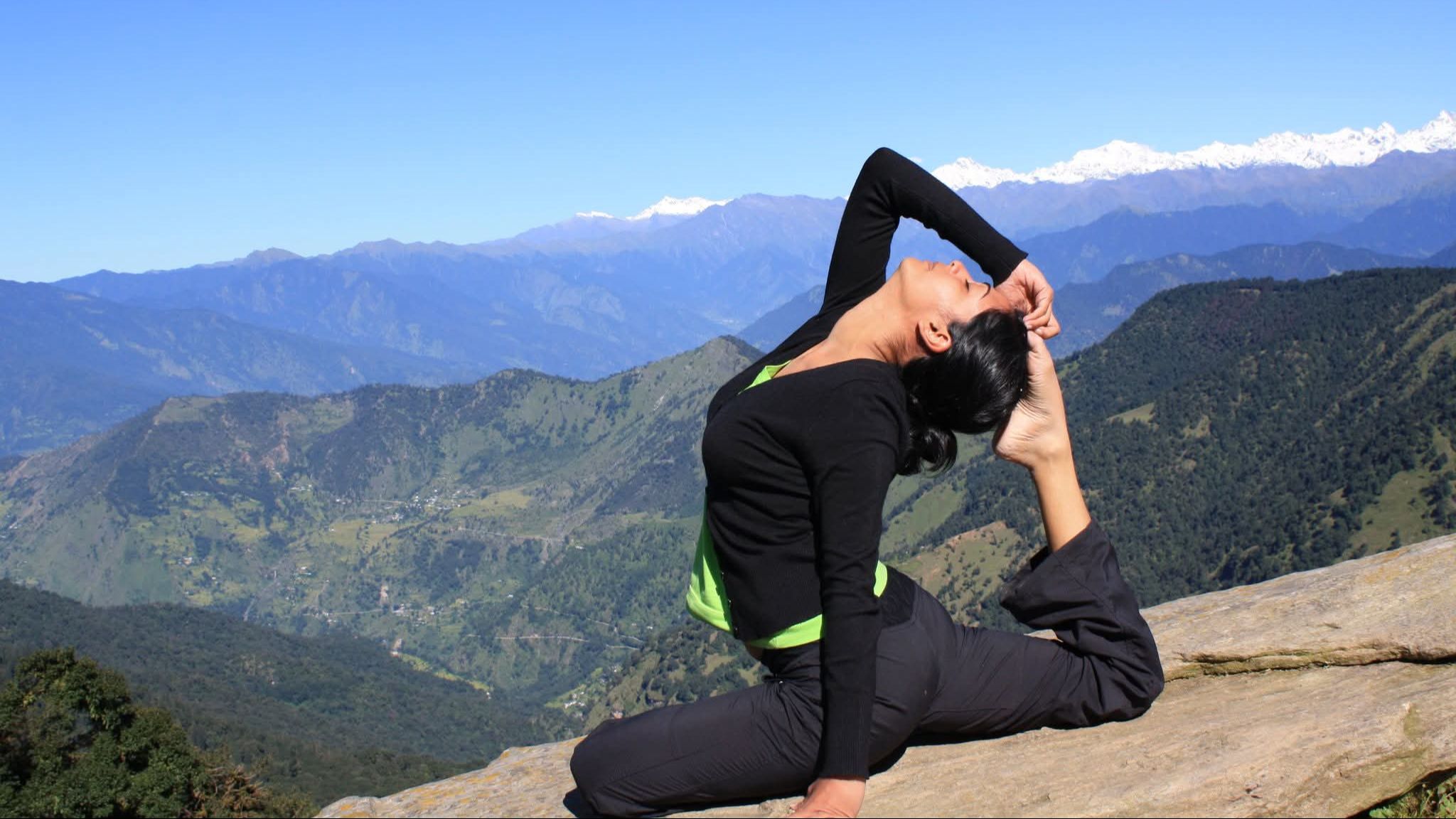
The last time I got upside down in a headstand was sometime last year. Maybe five months ago. I honestly can't remember.
I can't remember the last time I taught one either.
That's not a small thing to say. I'm a third generation yoga teacher, raised in a traditional hatha lineage where preparing the body always came before the pose. My grandfather understood this. What he couldn't have anticipated is how much further modern bodies would drift from the baseline he was preparing them from.
It took me a long time to see it, and if I'm honest, even longer to act on it.
When you're young and newly teaching, you give students what you think they want. The poses they see everywhere. The shapes that promise flexibility, youthfulness, a body that defies time. I believed, the way a lot of yoga teachers believe, that without those poses it wasn't really yoga.
But almost two decades of standing at the front of a room does something to you. It makes you bolder. More willing to trust what you're seeing over what you've been told.
Because the pattern had become impossible to ignore.
Spines that couldn't segment; that moved as one rigid block rather than bone by bone, vertebra by vertebra. Pelvic floors so chronically braced they had forgotten how to release. Diaphragms that barely moved with each breath, the ribcage locked, the breath shallow and held. Hips that had lost their full range so gradually their owners didn't even know it was gone. Shoulders that couldn't move freely overhead without the neck compensating.
And beside all of that, always alongside it, a quiet determination. A real desire to get into the shape. To do the pose.
The body was trying. The body was always trying. It just didn't have what the pose required underneath it.
We've handed it an advanced curriculum and skipped the prerequisites.
Here's what I mean.
The postures we try to get into today like the inversions, the deep twists, the arm balances, the backbends, didn't emerge in a vacuum. They were developed in a movement culture that looks almost nothing like ours.
In the bodies that yoga was built for, mobility wasn't something you worked on. It was a byproduct of an ordinary life. People sat on the ground. They squatted for long periods without thinking about it. They walked long distances on uneven terrain. They carried loads. They climbed. They moved through a full range of positions throughout the day, not because they were training, not because they'd read about it, but because that was simply how life happened.
Movement wasn't a class you went to. It was the texture of existing.
Those bodies already had strength. Already had range. Already had the kind of resilient, multidirectional mobility that modern life has quietly removed from us. Yoga wasn't trying to build them from scratch. It was refining something that was already there.
That's the assumption buried in every traditional posture: that the person arriving on the mat already has a body that moves like a human being.
Now look at what we've built in the last fifty years.
We sit. We sit for hours at desks. We sit in cars. We sit in the evening to decompress from all the sitting. Even our exercise, when we do it, tends to be linear and repetitive. The same narrow range of movement, repeated until it becomes the only range the body knows.
The result isn't weakness exactly. It's narrowness. A body that is capable within a small range and completely unprepared outside it.
That body walks into a yoga class. And the yoga class, in good faith, asks it to do something it was designed for a different era. The gap between what the posture assumes and what the modern body actually has, that gap is where frustration lives. It's also where injury comes from. A predictable structural mismatch that we've been calling a personal failing for decades.
Over the last few years, I have slowly shifted away from teaching any of these poses. If you have been a student of mine for a while, you may have noticed. No shoulder stand. No crow. No wheel.
Instead, the work has become quieter. More foundational. Focused on bringing the body back to that prerequisite stage, to a body that moves freely in all directions, that moves with ease, that isn't bracing against itself just to get through the day.
From the outside, none of it looks particularly impressive. Just breathing, like actually breathing, not holding. Slow movement through small ranges. Learning how the diaphragm and spine work together. Discovering what the hip joint can actually do when you stop forcing it. Letting the body remember a vocabulary it was never supposed to lose.
It is, by any conventional standard, unspectacular work.
But something happens when you do it long enough. The body stops bracing against movement. The joint stops guarding. And gradually, tentatively, movement stops feeling like something the body is fighting and starts feeling like something the body recognises.
That recognition? That's what yoga was always supposed to feel like. I don't think it was ever meant to be conquered. I think it was meant to be returned to.
And I'm watching that return happen in real time. The Foundations series we've been working through together this past couple of months has been one of the most quietly rewarding things I've brought to this community. Students are exploring strength, mobility and flexibility in a way that feels genuinely good in their bodies.
That, more than any pose, is the point.
I'm not saying the traditional poses don't matter. I'm not saying inversions are dangerous or that deep backbends have no place.
I'm saying: we've inherited a practice designed for a body that most of us no longer have. And rather than acknowledge that, we've spent years trying to force the modern body into shapes it isn't prepared for and wondering why it hurts.
The modern body is not a yoga body. That's not a failure. It's just where we are.
The real question is what we want to do about it. Whether we keep chasing the shape, or start rebuilding the foundation that makes the shape possible.
Eighteen years in, I know which one I find more interesting.
If you want to do this work together
For the past two months I've been running exactly this: my Yoga Foundations Series. Rebuilding the baseline. Relearning how the body is supposed to move before we ask it to do anything impressive.
All the previous sessions are there to go back to, so you can begin from the beginning and work through them in your own time. There's still a full month left, which is honestly a good place to come in. Enough time to feel a real shift, enough context in the earlier sessions to understand why we're doing what we're doing.
If this post landed somewhere in your body, that's probably the sign. I like to connect with everyone before they join, so the next step is simply a conversation. [Book a call to chat here.]
Bring some HAPI to your inbox.
Receive exclusively curated content on Yoga and Ayurveda practices to spark joy, inspire action and live with purpose.
.